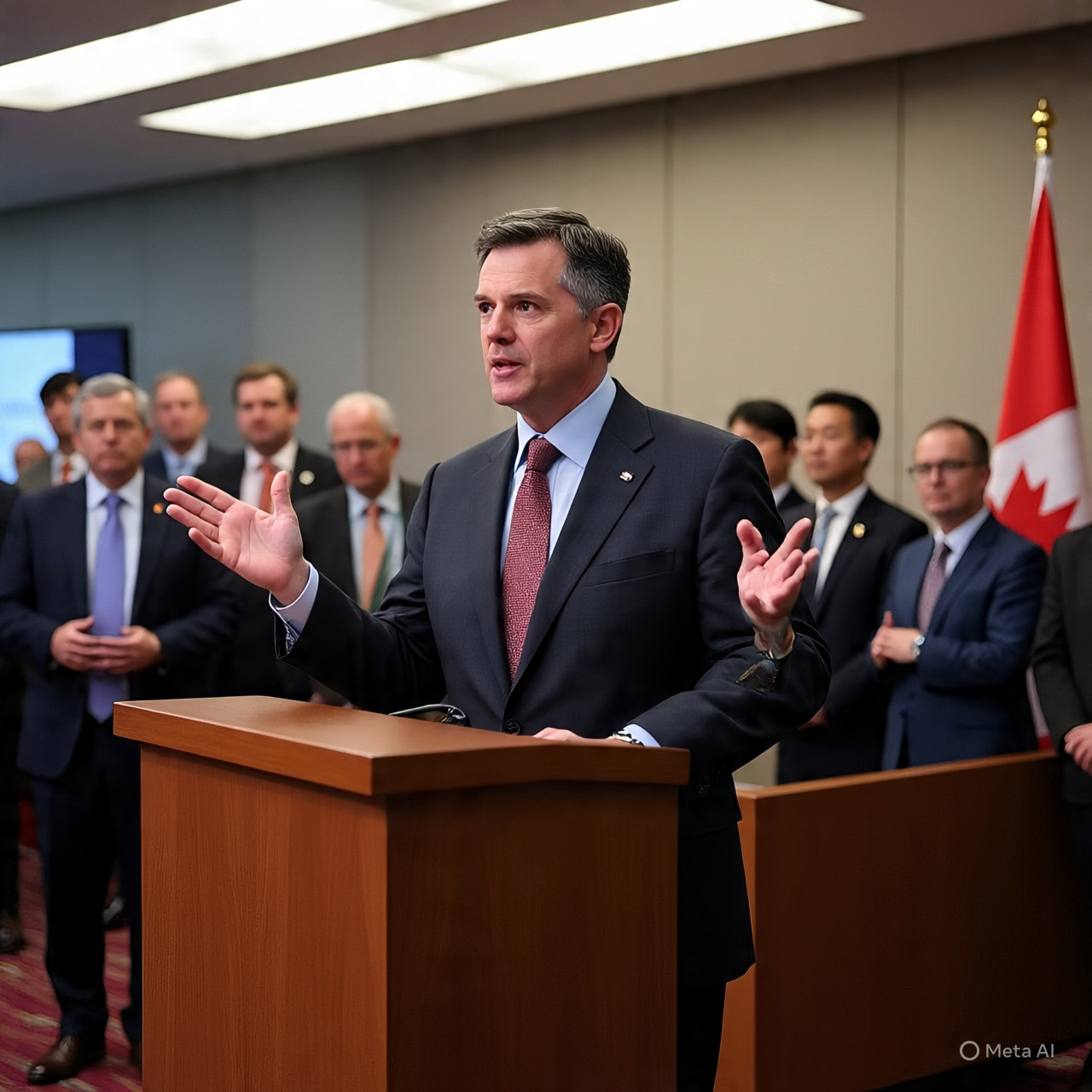
Prime Minister Mark Carney has unveiled a new wave of large-scale infrastructure and resource development initiatives, describing them as a fresh series of “nation building projects” aimed at reshaping Canada’s economic future. These projects are intended to boost national competitiveness, accelerate economic diversification, and reduce the country’s reliance on the United States by strengthening domestic production and expanding trade with global partners.
According to Carney, this latest group of mega-projects represents a transformative investment of approximately $56 billion and is expected to generate around 68,000 new jobs across Canada. The initiatives span multiple provinces and territories and cover critical sectors such as mining, energy, infrastructure, and natural resource development, all of which play a key role in long-term national growth.
A National Strategy for Economic Transformation
The newly announced projects are spread strategically across the country, reflecting a coordinated effort to stimulate regional economies while reinforcing Canada’s position as a global supplier of essential resources. From energy transmission networks in British Columbia to mining operations in Ontario, Quebec, and New Brunswick, and hydroelectric development in Nunavut, the plan signals a broad and ambitious vision for modernizing Canada’s economic framework.
Building Resilience Through Infrastructure
Carney emphasized that these initiatives are designed to connect regions, diversify economic activity, and create sustainable opportunities for Canadian workers. He described the projects as a long-term investment in the nation’s prosperity, intended to support trade expansion and domestic manufacturing while enabling Canada to compete more effectively on the global stage.
“These are projects that will connect, diversify and propel forward our economy,” Carney stated. “Projects that will help us expand our exports to new partners. Projects that will create hundreds of thousands of good-paying union jobs for Canadian workers.”
Key Projects Across the Country
The new tranche includes several high-profile developments that target critical sectors of the Canadian economy. Each project is aimed at enhancing production capacity while addressing growing global demand for essential materials and clean energy solutions.
British Columbia: Powering Resource Expansion
In northwestern British Columbia, a major energy transmission line is planned to supply power to emerging mining operations and facilitate export expansion. This infrastructure will support the extraction and processing of critical minerals, positioning the province as a central hub for resource development.
Additionally, British Columbia is set to host a new liquefied natural gas (LNG) facility, which, once completed, will become Canada’s second-largest LNG plant. The development is expected to significantly boost energy exports while contributing to job creation and regional economic growth.
Ontario and Quebec: Strengthening the Mining Sector
Further east, a proposed nickel mine in northern Ontario is among the flagship projects. The Crawford Nickel Mine, once operational, is anticipated to become the largest nickel sulfide mine in the western world. This project is seen as vital for supporting the battery supply chain and meeting the demands of electric vehicle production and renewable energy storage.
In Quebec, a new graphite mine is planned to supply materials essential for battery manufacturing and defense applications. The project aligns with Canada’s broader goal of becoming a reliable supplier of critical minerals, particularly as global industries shift toward sustainable and low-carbon technologies.
Atlantic Canada and the North
New Brunswick will see the development of a tungsten mine, further diversifying Canada’s mining portfolio and reinforcing its role in supplying strategic minerals. Meanwhile, a hydroelectric project in Nunavut is set to improve energy reliability in the region while supporting sustainable development in northern communities.
Together, these projects represent a comprehensive approach to strengthening Canada’s natural resource sector while maintaining a balance between economic growth and environmental responsibility.
The Role of the Major Projects Office
To ensure the efficient execution of these large-scale initiatives, the federal government has introduced the Major Projects Office. This newly established body is tasked with streamlining approval processes and accelerating infrastructure development by reducing administrative delays.
Fast-Tracking Development and Financing
Dawn Farrell, Chief Executive Officer of the Major Projects Office, explained that the office’s primary objective is to help projects move seamlessly from planning to completion. By cutting red tape and coordinating with stakeholders, the office aims to ensure that initiatives are delivered on time and within budget.
“Our job is all about making sure that people get across the line, get everything they need to get it built on time and on budget,” Farrell said, highlighting the commitment to efficiency and accountability.
Political Reactions and Opposition Concerns
While the projects have received support from several provincial leaders, the initiative has also drawn criticism from opposition parties. Conservative leader Pierre Poilievre expressed skepticism, arguing that the creation of the Major Projects Office adds another layer of bureaucracy for resource companies.
Concerns Over Red Tape
“He’s created yet another bureaucracy, a new bureaucratic hurdle for miners, for oil and gas enterprises and other resource companies to jump through in order to get anything approved,” Poilievre said, questioning whether the new structure would genuinely simplify the process.
Despite these concerns, the government maintains that the office is designed to remove obstacles rather than create them, providing clearer pathways for approval and funding.
Meeting the Growing Demand for Critical Minerals
A significant focus of Carney’s announcement is the development of critical mineral corridors, particularly in northwest British Columbia and the Yukon. These regions are known to hold vast deposits of minerals essential for modern technologies and sustainable energy systems.
Preparing for Global Market Shifts
Carney highlighted projections indicating that global demand for critical minerals is expected to increase fivefold by 2050. He noted that current supply chains are heavily concentrated in a single country, creating risks for the global economy.
“What the world wants is Canada to be the reliable supplier of critical minerals as the world moves toward building a more sustainable economy,” Carney explained, reinforcing Canada’s ambition to become a trusted source for these essential materials.
Provincial Support and Calls for Expanded Investment
Provincial leaders have largely welcomed the announcement, recognizing the economic potential of the new projects. However, some provinces are calling for even greater investment, particularly in large-scale energy development.
Ontario’s Push for Nuclear Expansion
Ontario Premier Doug Ford has supported the Crawford Nickel Mine but is also advocating for increased federal involvement in nuclear energy. Stephen Lecce, Ontario’s Energy and Mines Minister, emphasized the need for substantial funding to support national nuclear infrastructure and research.
He stated that investing in large-scale nuclear development could significantly contribute to Canada’s GDP while strengthening energy security and reducing reliance on external sources.
Confidence Building Through Project Referrals
Although none of the newly announced projects have yet received official designation, Carney explained that their inclusion on the referral list provides reassurance to investors and stakeholders. This status is intended to signal government backing and improve access to financing, making it more likely that these projects will progress to completion.
Strengthening Investor Confidence
Being part of the referral process allows projects to benefit from streamlined procedures, reducing uncertainty and encouraging private sector participation. Carney noted that this approach ensures that Canada remains competitive in attracting investment and executing large-scale developments.
‘Buy Canadian’ Policy and National Economic Vision
In addition to promoting infrastructure development, Carney reinforced his ‘buy Canadian’ policy, which will apply to major projects. This policy aims to prioritize domestic suppliers and contractors, ensuring that Canadian businesses and workers directly benefit from federal investments.
Supporting Domestic Industry
By encouraging the use of Canadian-made materials and services, the government hopes to strengthen local industries and keep more economic value within the country. This strategy reflects a broader vision of building a self-reliant and resilient national economy.
Conclusion: A Defining Moment for Canada’s Economic Future
Prime Minister Mark Carney’s announcement of a new round of nation building projects mar
Leave a Reply