Introduction
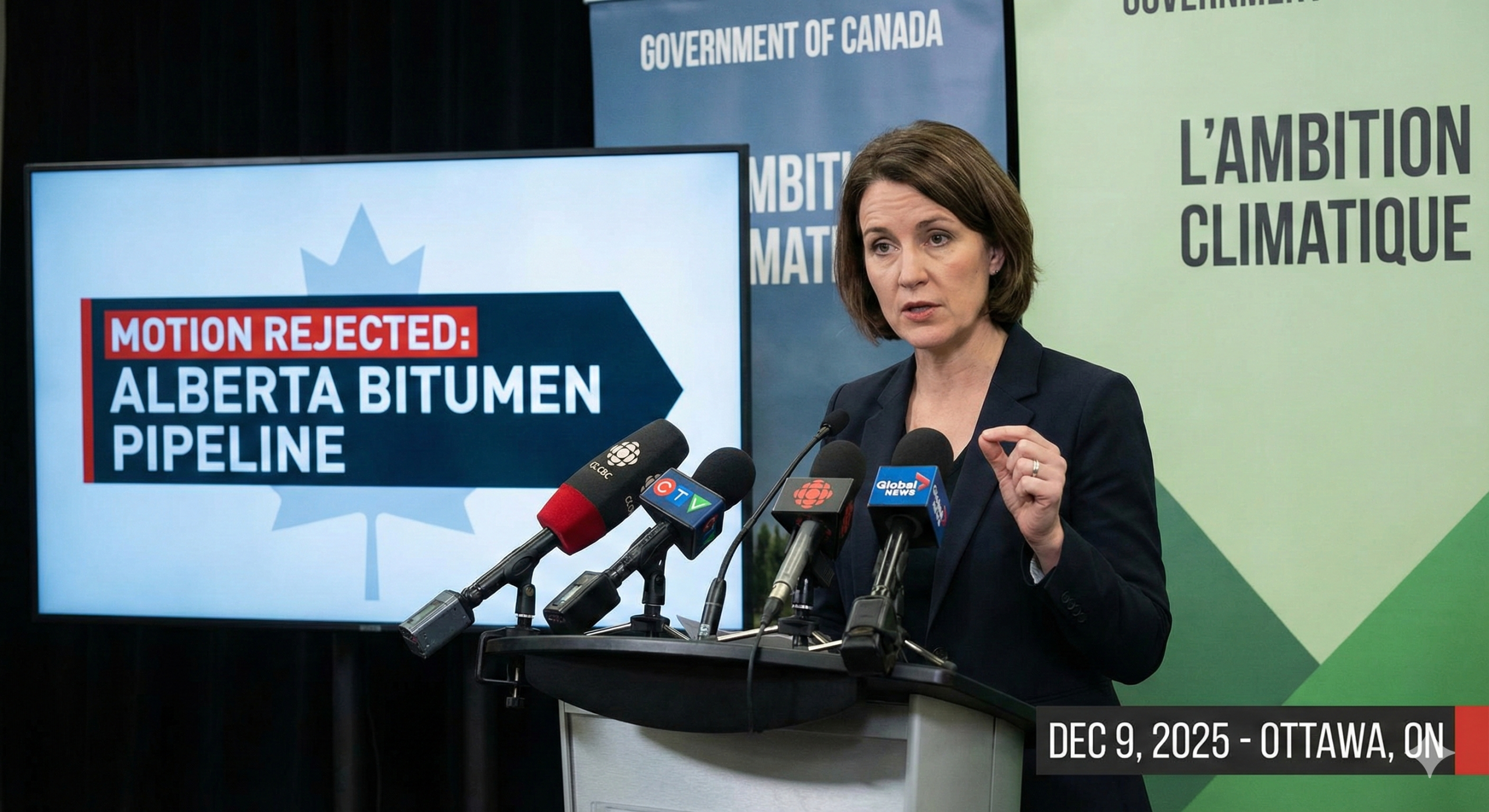
The Liberal government led by Prime Minister Mark Carney is preparing to vote against a Conservative motion that urges federal support for a large-scale bitumen pipeline project connecting Alberta to a strategic deep-water port on British Columbia’s coast. The non-binding motion, scheduled for a vote on Tuesday, has triggered political tensions over Canada’s energy future, carbon pricing commitments, and federal–provincial cooperation at a time when the country is already navigating a trade war with the United States.
According to a senior government source who spoke with CTV News, the Liberals believe the motion fails to reflect the full scope of the memorandum of understanding (MOU) recently signed between Ottawa and Alberta—an agreement they consider essential for any progress on new oil infrastructure. Conservatives, meanwhile, argue that the vote is necessary to expose what they call Liberal inconsistency and ambiguity on pipeline development.
Conservative Motion Sparks Heated Debate
What the Motion Calls For
The opposition motion explicitly urges the federal government to support “one or more pipelines enabling the export of at least one million barrels a day of low-emission Alberta bitumen from a strategic deep-water port on the British Columbia coast to Asia markets.” It also calls for adjustments to the Oil Tanker Moratorium Act, emphasizing that any changes must respect the duty to consult Indigenous Peoples.
The text closely mirrors the MOU signed last month between the federal government and Alberta but notably excludes several conditions Alberta agreed to as part of the negotiations. Those omissions are at the heart of the Carney government’s opposition to the motion.
Liberals Say Key Elements Are Missing
A senior government official said the Conservatives’ version “ignores critical elements” of the MOU—specifically:
-
Alberta’s agreement to negotiate a robust industrial carbon pricing system,
-
Co-ownership and financial participation opportunities for Indigenous communities, and
-
Commitments to meaningful engagement with the province of British Columbia.
Without these components, the government argues, the motion presents an incomplete—and potentially divisive—path to energy development.
“By refusing to support all elements of this MOU, Conservatives are demonstrating their intent to divide Canadians and inability to get big things built,” the source said, adding that the current trade conflict with the U.S. makes national unity even more critical.
Inside the Alberta–Ottawa Agreement
Alberta’s Commitments
Under the MOU, Alberta agreed to negotiate a new industrial carbon pricing framework by April 2026, setting a minimum price of $130 per tonne. The province also committed to advancing the Pathways Project, which is poised to become the world’s largest carbon capture, utilization, and storage (CCUS) system.
The Pathways initiative is part of a broader effort to position Canadian oil as among the lowest-emission sources globally. Federal officials argue these environmental and technological commitments are essential to ensuring that any future pipeline gains social license and economic viability.
Federal Concessions to Alberta
In exchange, the federal Liberal government pledged to:
-
Suspend clean electricity regulations within Alberta,
-
Refrain from implementing a federal oil and gas emissions cap in the province, and
-
Consider making an exemption to Canada’s tanker ban if circumstances warrant.
The MOU does not guarantee construction of a pipeline but establishes a framework for how federal and provincial policies must align before a private proponent can bring forward a viable project. Prime Minister Carney has repeatedly stated that no pipeline will be built unless a private company is prepared to lead and finance the proposal.
Political Tension on Parliament Hill
Alberta Liberal MP Warns of “Divisive” Motion
Speaking to reporters on Parliament Hill, Alberta Liberal MP Corey Hogan described the Conservative motion as “designed to provoke and divide,” suggesting that the forced vote could weaken the chances of a pipeline ever being built.
Hogan argued that a “yes” vote could be misconstrued by Indigenous communities in British Columbia as the government disregarding its duty to consult, while a “no” vote might be misinterpreted as opposition to the pipeline itself.
“A yes or no vote makes the pipeline less likely,” Hogan said, emphasizing the importance of maintaining trust with all parties involved.
Conservatives Push Back
Conservative House Leader Andrew Scheer, in an interview on CTV Power Play with Vassy Kapelos, rejected claims that the motion was divisive. Instead, he said the vote provides the Liberals with “an opportunity to vote for their own MOU.”
Scheer argued that the MOU contains “ambiguity,” and that by passing the motion, the government would send a clear signal of support for pipeline development.
“We’ve lifted language right from the MOU,” Scheer said. “If they vote in favour, then that would send a signal that they’re at least going to back up what they sign on to.”
Alberta Premier Welcomes Agreement
Alberta Premier Danielle Smith has previously hailed the energy deal with Ottawa as “a great day for Alberta.” She has framed the agreement as a breakthrough that acknowledges Alberta’s economic priorities while integrating climate commitments the province finds reasonable.
When asked about Smith’s praise, Scheer insisted that Conservatives would never impose an industrial carbon tax on a province, reaffirming the party’s longstanding opposition to federal carbon pricing frameworks.
“We’re pro-energy,” Scheer said. “We don’t believe that the government should make it harder to get things built.”
The Bigger Picture: Energy, Environment, and Federal Harmony
Navigating Trade Tensions
The senior government source highlighted that Canada is currently engaged in a trade confrontation with the U.S., which adds pressure to present a united front domestically. The Liberals believe the Conservative motion oversimplifies a deeply complex issue that requires broad cooperation between federal officials, the Alberta government, British Columbia, Indigenous communities, and private sector partners.
Balancing Environmental and Economic Pressures
The national debate around pipelines continues to sit at the intersection of economic opportunity and climate responsibility. Alberta’s bitumen industry remains central to the province’s economy, while federal climate policy remains a cornerstone of the Carney government’s agenda.
The MOU attempts to bridge those interests by combining incentives for industry growth with commitments to carbon reduction and technological innovation. The Conservatives, however, argue that such agreements should not come with strict carbon pricing demands or regulatory barriers.
Conclusion
As Parliament prepares for the vote, the divide between government and opposition reflects not just a disagreement over a single pipeline motion but a broader philosophical clash over the future of Canada’s energy sector. The Carney government insists that any progress must follow the balanced framework laid out in the MOU, including carbon pricing commitments, Indigenous participation, and provincial cooperation. Conservatives counter that the Liberals are hesitating and sending mixed signals at a time when Canada should be aggressively championing energy infrastructure.
Leave a Reply