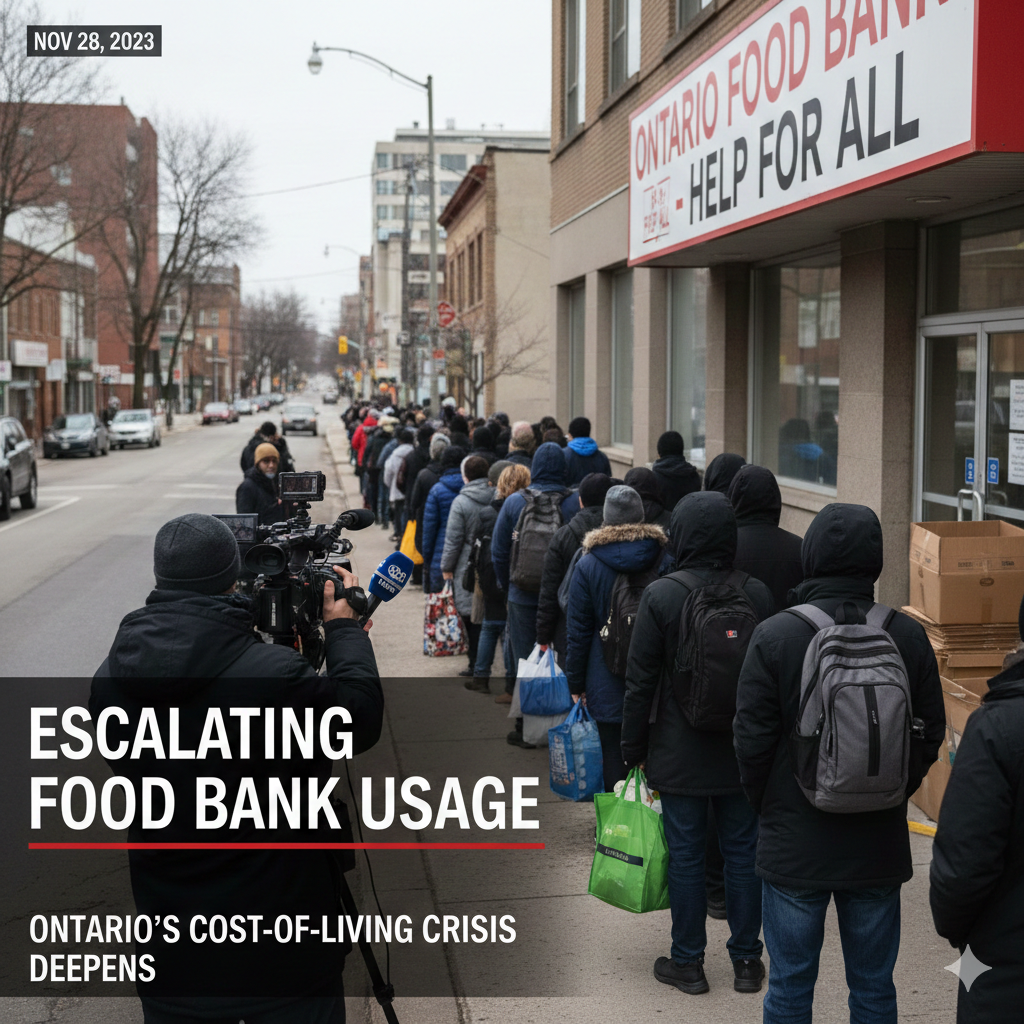
Ontario is facing an unprecedented rise in food insecurity, with more than one million residents relying on food banks over the past year, according to a new report from Feed Ontario. While the figures are staggering, experts working on the frontline say the reality is something they witness every single day — and the situation continues to worsen.
The 2025 Hunger Report paints a stark picture of life in the province, revealing that food bank usage has reached historic highs. Between April 1, 2024, and March 31, 2025, Ontarians made approximately 8.7 million visits to food banks, representing a 13 per cent increase from the previous year. This marks the ninth consecutive year of rising demand and sets a new record for food bank usage in the province.
For organizations like Toronto’s Daily Bread Food Bank, the data simply confirms what they already know: more people than ever are struggling to afford basic necessities.
Frontline Workers See the Crisis Unfold Every Day
Neil Hetherington, Chief Executive Officer of Toronto’s Daily Bread Food Bank, described the findings as disheartening but not surprising. According to him, the numbers reflect an ongoing crisis that his organization has been trying to manage for years.
“We see it here every single day at the food bank,” Hetherington said. “It’s been a real struggle to make sure we can meet the growing need.”
He explained that the scale of demand has become difficult to comprehend. The number of clients served by Daily Bread each month is so high that it would be enough to fill the Rogers Centre — not just once, but eight times.
One in Ten Torontonians Now Rely on Food Banks
Daily Bread estimates that more than one in every 10 people living in Toronto now depends on a food bank to get by. Just three years ago, that number was closer to one in 20. The trend shows a rapid and alarming increase, revealing how quickly families and individuals can slip into food insecurity as living costs continue to rise.
Children now make up approximately one in four people accessing food bank services in the city. This signals a growing impact on families with young dependents, many of whom may already be facing challenges around housing, childcare, and access to affordable education and healthcare.
Who Is Using Food Banks in Ontario?
The Feed Ontario report offers insight into the demographics of people turning to food assistance. Contrary to common myths, those using food banks are not limited to any single group. Instead, the data shows a wide cross-section of Ontarians are affected.
First-Time Users Are Increasing
One in three people who accessed a food bank over the past year were doing so for the first time. This suggests that many households that previously managed without assistance can no longer keep up with rising costs.
Children and People with Disabilities Among the Most Affected
The report found that:
-
One in three food bank users is under the age of 18.
-
One in three individuals accessing services has a disability.
-
One in four users is employed but still unable to earn enough to cover basic living expenses.
Three out of every four people who rely on food banks are tenants. With rental costs continuing to soar across Ontario, many households are forced to choose between paying rent and buying groceries.
Senior Usage Has Doubled in Five Years
One of the most concerning findings is the sharp rise in seniors accessing food banks. The number of older adults seeking support has doubled compared to five years ago. Fixed incomes, such as pensions, have not kept pace with inflation or the skyrocketing cost of housing, utilities, medication, and food.
This has left many seniors — who once lived independently without assistance — now relying on food banks to meet their basic needs.
Rising Need Without Rising Supply
While the number of people needing help is increasing rapidly, the amount of food available is not growing at the same pace. Hetherington pointed out that Daily Bread is not distributing significantly more food than before — the existing resources are simply being spread across a much larger number of people.
Each client typically receives enough food to last for three days per week, but as demand grows, the pressure on supply chains, donations, and volunteers also intensifies.
A previous Daily Bread report titled Who’s Hungry, released in October, highlighted a troubling trend: many people are now turning to food banks more frequently and for longer periods of time, even while holding multiple jobs or possessing post-secondary education. Degrees and steady employment, which once acted as shields against poverty, are no longer guarantees of financial security.
Warning Signs of a Larger Social Crisis
The Hunger Report links the escalating use of food banks to broader systemic issues. Without meaningful intervention, experts warn that Ontario could see an increase in homelessness, greater strain on the health care system, and rising instability in communities throughout the province.
Food insecurity is rarely an isolated problem. It often intersects with mental health challenges, chronic illness, unstable housing, and unemployment or underemployment. As more people struggle to meet their basic needs, the social safety net becomes stretched thinner.
Advocates stress that food banks are meant to be a temporary support, not a permanent solution. The increasing reliance on them indicates deeper, unresolved issues related to poverty and inequality.
Political Response in the Legislature
The findings of the Feed Ontario report quickly made their way into Queen’s Park, where opposition Members of Provincial Parliament questioned the government about its strategy to address the growing risk of homelessness and hunger.
Government Focuses on Jobs and Infrastructure
Ontario Premier Doug Ford defended his government’s economic approach, emphasizing large-scale infrastructure investments and job creation. He reiterated that the province is investing around $220 billion in infrastructure projects, including the construction of hospitals, roads, bridges, and schools.
According to Ford, these projects are designed to strengthen the economy and create employment opportunities, which he believes will ultimately reduce poverty levels.
Affordability Measures Highlighted
Ontario Finance Minister Peter Bethlenfalvy also responded to concerns, stating that improving affordability has been a key focus of the government since taking office. He pointed to recent measures that, according to the province, have returned approximately $12 billion to Ontarians through various financial relief initiatives.
However, critics argue that despite these efforts, food bank usage continues to rise — suggesting that current strategies are not reaching the most vulnerable populations effectively.
Calls for Systemic Change
Green Party Leader Mike Schreiner responded to the report by calling for immediate implementation of its recommendations. He argued that relying on food banks to fill policy gaps is unsustainable and places unnecessary stress on charitable organizations.
Schreiner and other advocates have outlined several key actions they believe could reverse the trend:
Improve Social Assistance Programs
Current benefit levels for social assistance and disability support are widely seen as insufficient to cover basic living expenses. Increasing these payments could provide immediate relief to thousands of Ontarians living below the poverty line.
Invest in Affordable Housing
With housing costs consuming a significant portion of household income, expanding access to safe and affordable housing is considered one of the most effective long-term solutions to food insecurity.
Support Low-Income Workers
Allowing low-income individuals to keep more of what they earn by adjusting income thresholds and benefit clawbacks would provide greater financial stability.
Prioritize Voices With Lived Experience
Advocates stress the importance of involving people who have experienced poverty and food insecurity in policy discussions, ensuring that solutions are rooted in real-life challenges and practical needs.
Conclusion: A Crisis That Cannot Be Ignored
The surge in food bank usage across Ontario is more than just a statistic — it is a reflection of a growing affordability crisis impacting individuals, families, workers, seniors, and children alike. As the cost of living continues to climb faster than wages and benefits, many people are finding themselves trapped in a cycle of financial instability.
Organizations like Daily Bread Food Bank continue to serve as a crucial lifeline for those in need. However, frontline workers and advocates agree that charity alone cannot solve a structural problem. Without bold and targeted policy changes, rising demand may soon overwhelm a system already stretched to its limits.
The Hunger Report stands as a warning — and an opportunity. It calls for coordinated action from government leaders, community organizations, and society as a whole to ensure that no one in Ontario has to wonder where their next meal will come from.
Leave a Reply