Introduction: A Vision That Slowly Faded
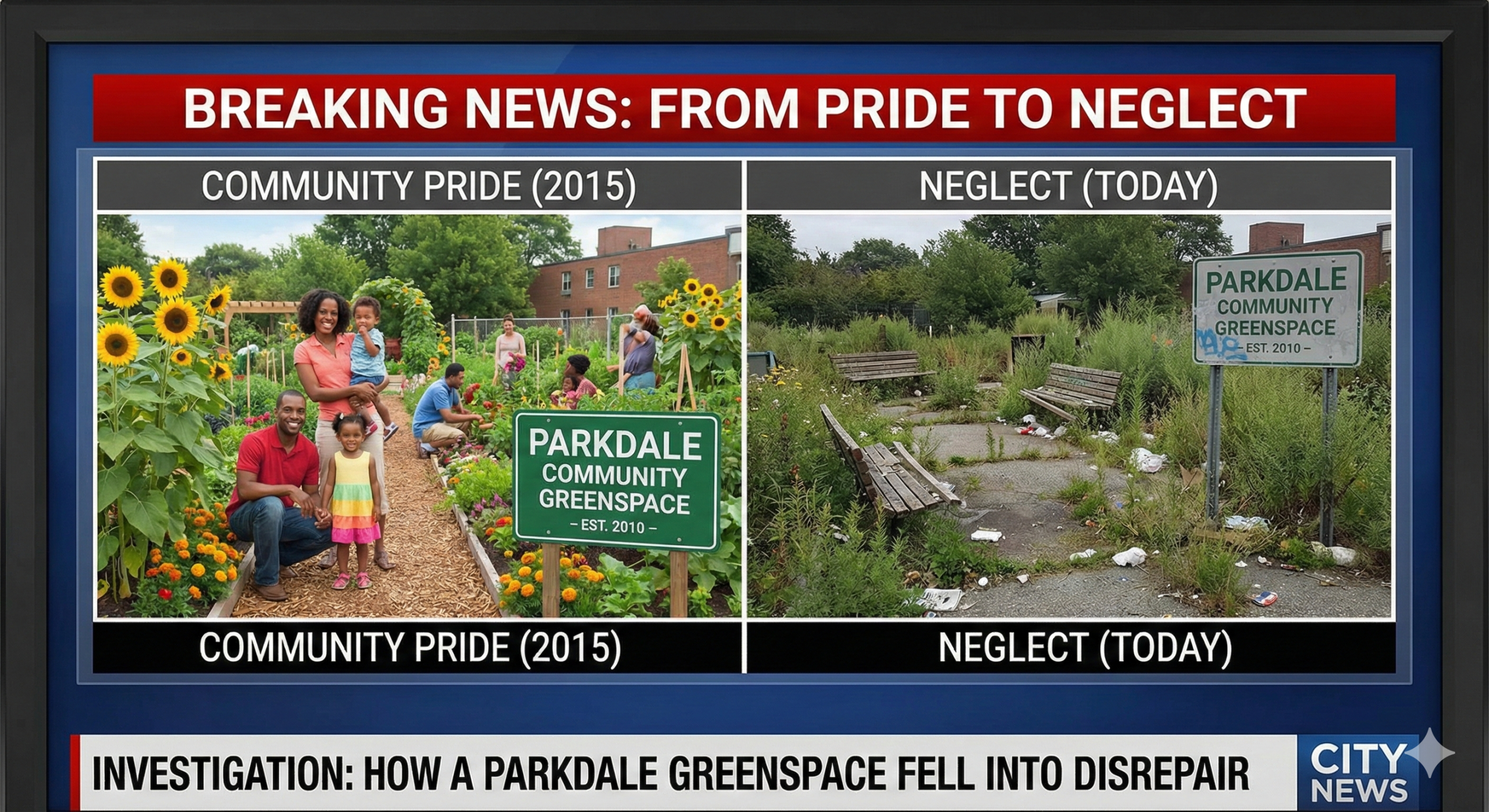
What was once imagined as a modest yet meaningful tribute to the Parkdale community has gradually transformed into an overlooked and deteriorating stretch of land. Nestled along Lansdowne Avenue, just south of Dundas Street, a narrow strip of greenspace sits beside the Lansdowne railway underpass. For nearby residents, it tells a quiet but troubling story—of urban neglect, broken promises, and the slow disappearance of civic pride.
Originally designed as part of an underpass revitalization project in the early 1990s, the strip of land was meant to beautify a forgotten corner of Parkdale and offer a small, calming green passageway within the busy city landscape. Today, however, community members describe it with far less flattering terms, calling it a “wasteland” and even a “garbage dump.”
Local residents and members of the Parkdale Residents Association (PRA) say the city has failed to adequately maintain the area. Despite repeated concerns, they claim little has changed, and the condition of the greenspace continues to worsen.
The Original Purpose of the Parkdale Underpass Project
In or around 1993, the City undertook a beautification initiative as part of a broader underpass revitalization plan. According to a plaque still visible near the site, the improvements were formally dedicated by then-Mayor June Rowlands to both the Parkdale community and the people of Toronto.
At the time, the transformation was significant. Concrete planters were installed along the slender stretch of land. A row of locust trees was planted, neatly arranged to add greenery and structure to the space. Decorative lighting was added to improve visibility and aesthetics, and a staircase was constructed to connect pedestrians from the top of the underpass down to street level.
For many residents who remember that period, the change was dramatic and positive. The once-undistinguished strip of grass became a symbol of care and investment in the community—a small but powerful reminder that even overlooked spaces could be transformed with purpose and attention.
Ric Amis, chair of the Parkdale Residents Association and a long-time resident of the neighborhood, recalls the early days clearly.
“When it was brand new, it looked gorgeous,” he said, reflecting on the revitalization project that once filled the area with pride and potential.
A Gradual Decline Into Disrepair
Over the years, however, the narrow parcel of land appears to have slipped off the city’s radar. According to Amis and other residents, regular maintenance—such as grass cutting, tree trimming, and waste removal—has either become inconsistent or completely stopped.
What was once carefully landscaped is now overgrown and littered with debris. The grass, in some sections, has grown as high as a person’s thigh. Locust tree branches extend outward unevenly, hanging low and untrimmed. The concrete planters, once intended to house plants and flowers, now serve a very different purpose.
“It’s a wasteland for Tim Hortons coffee cups,” Amis remarked. “It’s just a garbage dump.”
Discarded items litter the ground: old signage, plastic bags, dog feces left behind in tied bags, broken bottles, and even abandoned bike tires. The accumulation of trash has not only taken away from the visual appeal of the area but has also created concerns about hygiene and safety.
Residents who pass through or near the underpass now avoid looking toward the strip altogether. For many, it represents a stark contrast between what was promised and what remains.
Community Frustration and Concerns
Members of the Parkdale Residents Association say they have raised concerns with the city multiple times. However, they feel that action has either been delayed or insufficient. The small size of the greenspace—approximately a block long and only about two metres wide—makes the lack of maintenance even more puzzling to residents.
“It’s not a massive park or a complex facility,” Amis noted. “It’s a relatively small stretch of land. There is no reason it should be in this condition.”
Beyond appearance, there are real concerns about public safety and environmental health. Overgrown vegetation can attract pests and create hiding spots for discarded sharp objects or hazardous materials. Broken bottles or hidden debris pose a risk to children, pedestrians, and pets. During rainy seasons, clogged or poorly maintained areas can also contribute to drainage issues.
Residents believe that the neglect sends an unfortunate message about whose neighborhoods are valued and cared for. For a community that has long years of history, cultural significance, and resilience, the condition of this greenspace feels like abandonment.
The Emotional Impact on Long-Time Residents
For long-term Parkdale residents, this is not just about untidy grass and trash; it’s also about lost identity and fading memories. The revitalization project of the 1990s represented an era when public spaces were invested in and community spirit was celebrated.
Seeing it crumble evokes frustration and disappointment, particularly for those who remember its original state.
“It was meant to be part of Parkdale’s pride,” said one resident who has lived in the area for decades. “Now it just reminds you of what the city lets fall apart once the ribbon-cutting is done.”
This emotional response highlights an important issue facing many communities: time-limited attention from authorities. Once a new project is launched and celebrated, long-term care and consistent monitoring often become an afterthought.
The City’s Position and Assessment of the Site
In response to the growing concerns, the city has confirmed that it has assessed the location and is currently mapping out potential next steps toward a cleanup and restoration. While details on timelines and budgets have not yet been made public, officials have acknowledged the complaints and verified that they are reviewing the condition of the site.
For residents, this acknowledgement is only the first step. What they want now is action—concrete plans for cleaning, landscaping, and long-term maintenance that prevents the space from falling into disrepair again.
The local community hopes the city will not only clean the area but also reassess its purpose. Could the space once again serve as a welcoming green corridor? Could it incorporate low-maintenance plants, community art, or seating? These are questions residents are eager to explore if they are given a voice in the decision-making process.
A Chance for Renewal and Reconnection
Despite the present condition of the greenspace, many residents remain hopeful. History proves that the area can be transformed. With planning, consistency, and respect for the community, the neglected strip of land could once again become a meaningful part of Parkdale’s urban landscape.
The situation also opens a broader conversation about how cities manage small public spaces. While major parks and downtown areas often receive attention and funding, smaller neighbourhood spaces are just as important. They contribute to mental well-being, community connection, and neighborhood identity.
The Parkdale strip may be narrow, but its significance—past, present, and future—is anything but small.
Conclusion: Remembering the Past, Demanding a Better Future
The once-proud greenspace along Lansdowne Avenue stands as both a reminder of thoughtful urban design and a warning about the consequences of neglect. What began as a tribute to Parkdale and the greater Toronto community has, over time, become a symbol of abandonment in the eyes of local residents.
As the city considers its next steps, the community is watching closely. They are not simply asking for the removal of trash or the trimming of grass. They are asking for recognition, respect, and a renewed commitment to preserving the spaces that give their neighborhood character and dignity.
Whether this neglected strip of land will return to its former beauty remains to be seen. But one thing is certain: Parkdale’s residents are no longer staying silent about the places that matter most to them.
Leave a Reply