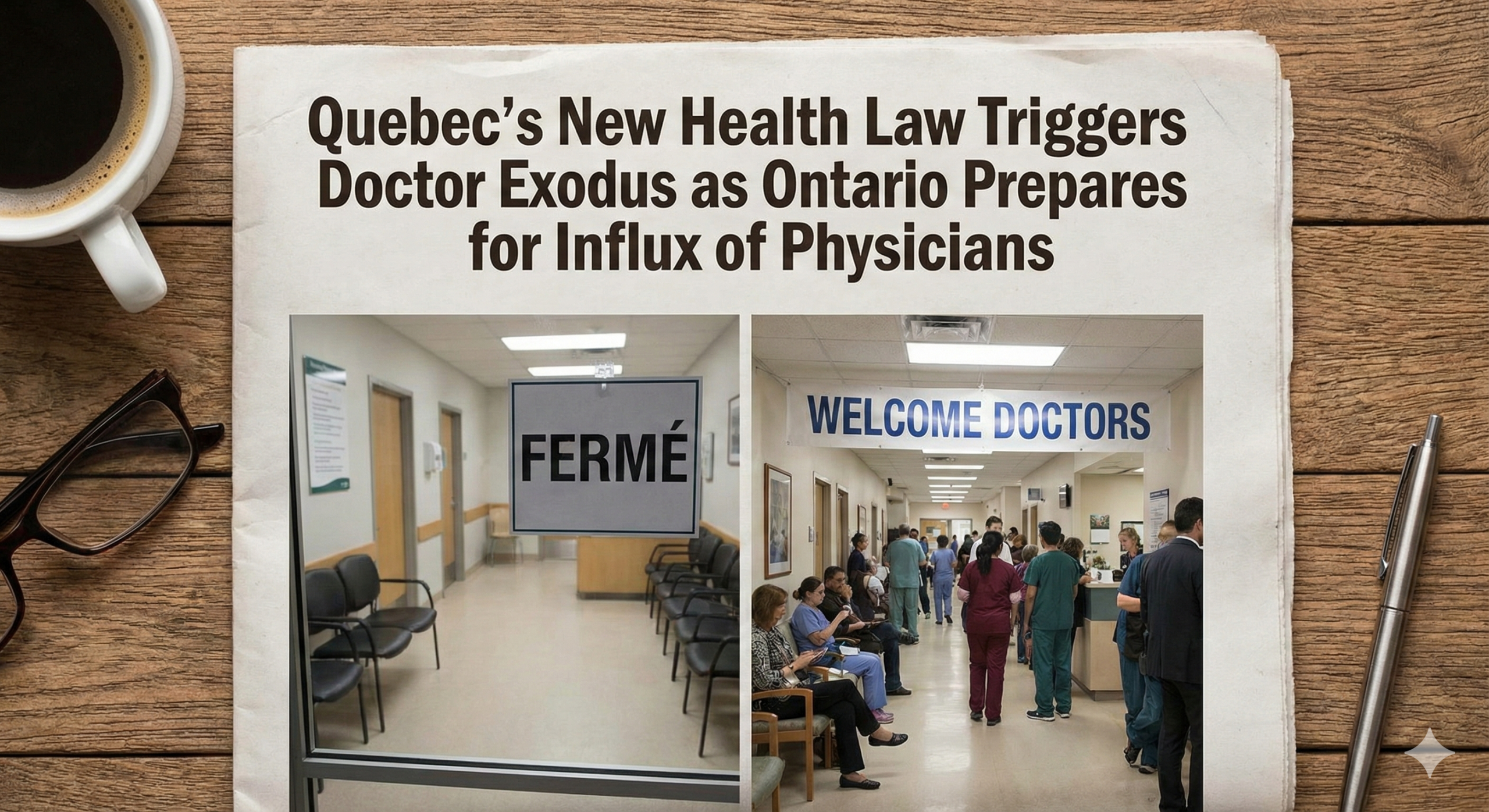
Ontario is preparing for a significant wave of incoming physicians as a growing number of doctors from Quebec seek to relocate in response to a controversial new law that dramatically changes how healthcare professionals are paid in the French-speaking province. The legislation, intended to reform Quebec’s healthcare system, has sparked widespread dissatisfaction among doctors, with many now looking to Ontario as a more stable and respectful environment to continue their medical practice.
Over the past several weeks, the Ontario College of Physicians and Surgeons has reported receiving nearly 300 applications from Quebec-based doctors expressing interest in practising in Ontario. This surge has raised national attention, highlighting deep tensions between healthcare professionals and the Quebec government over recently introduced payment and performance reforms.
A Controversial Law Reshaping Quebec’s Healthcare System
At the core of the unrest is a new law introduced by Quebec’s provincial government that significantly alters the way physicians are compensated. Traditionally, doctors in Quebec were paid primarily through a fee-for-service model. However, the new system links a portion of their salaries to performance targets, aiming to improve efficiency and patient care metrics.
Performance-Based Pay Model Sparks Outrage
Under the revised structure, family doctors will receive a fixed payment for each patient visit, with additional income tied to meeting specific productivity and service benchmarks. These include requirements such as treating 75 percent of emergency room patients within 90 minutes and completing 97 percent of surgeries within a year of medical assessment. Should these targets not be met, doctors face the possibility of having their wages reduced through salary clawbacks.
Critics argue that the system fails to account for real-world operational challenges, including staff shortages, limited hospital resources, and increasing patient volumes. Many physicians feel they are being unfairly penalised for systemic problems beyond their control.
Doctors Speak Out: Frustration from the Frontlines
Dr. Trevor Hennesey, a Quebec physician who has decided to move his practice to Ontario, has publicly expressed frustration over the situation. He described a critical shortage of nurses leading to hospital operating room closures, which directly affects patient care and physician productivity.
According to Dr. Hennesey, nine of the twelve operating rooms at his hospital have been closed due to insufficient nursing staff, leaving surgeons and anaesthetists unable to perform procedures. Despite these limitations, doctors are being held accountable for delays and inefficiencies that stem from broader infrastructure failures.
“We have professionals ready and able to work, but the system simply doesn’t allow it,” Hennesey explained. “And yet, we’re being blamed for the issues in the system.”
Growing Discontent and Mass Protests
Although the law will not officially come into effect until January, it has already led to widespread unrest. Thousands of doctors and healthcare workers joined protests over the weekend, voicing strong opposition to the government’s approach. Many view the legislation as punitive rather than supportive, designed to pressure physicians rather than address the root causes of healthcare challenges.
Harsh Penalties for Protesters
In response to the demonstrations, Quebec authorities warned that doctors participating in protests could face fines of up to $20,000 per day. This has further intensified tensions, with medical associations arguing that such penalties stifle democratic expression and worsen the fragile relationship between the government and the healthcare community.
Despite the threat of heavy fines, protests have continued, reflecting the depth of frustration among physicians who fear the new system will damage morale, reduce healthcare quality, and push skilled professionals out of the province.
Ontario Seizes the Opportunity
As Quebec grapples with discontent among its medical workforce, Ontario is positioning itself as an attractive alternative for displaced physicians. Premier Doug Ford has publicly invited Quebec doctors to apply for positions in Ontario, emphasising the province’s commitment to respecting healthcare professionals and providing a supportive working environment.
A Welcoming Message from Ontario Leadership
“If you treat your doctors well and you respect them, they’re going to stay, and they’re going to have a thriving practice,” Ford stated, reinforcing Ontario’s stance as a province that values and supports its medical community.
The influx of Quebec doctors could help alleviate Ontario’s own healthcare workforce shortages, particularly in rural and underserved areas. With increased demand for medical services across Canada, this movement could bring both opportunities and challenges to Ontario’s healthcare system.
Quebec Government Defends Its Position
Quebec Premier François Legault has firmly defended the new law, arguing that reforms are essential to improve the efficiency and accessibility of healthcare services. According to Legault, performance-based measures are necessary to ensure that public funding delivers tangible results and that patients receive timely care.
Focus on Patient Outcomes
Legault maintains that the changes are designed to create accountability and reduce long wait times, which have long been a concern in Quebec’s healthcare system. He insists that the ultimate goal is to improve conditions for patients and create a more responsive healthcare framework.
However, many healthcare professionals believe the approach is overly rigid and ignores practical realities, such as resource shortages and burnout among frontline workers.
Impact on Quebec’s Healthcare System
If the trend continues, Quebec may face significant challenges in retaining qualified doctors, particularly specialists and family practitioners. The departure of experienced physicians could strain hospitals, extend waiting periods, and reduce access to healthcare services for residents across the province.
Risk of Long-Term Damage
Healthcare experts warn that a mass migration of doctors could create long-term implications, including increased patient loads, reduced quality of care, and higher pressure on remaining medical staff. This could further destabilise an already stretched healthcare system.
Moreover, the loss of trained professionals represents not only a medical deficit but also a financial one, as Quebec has invested significantly in the education and training of its doctors.
Ontario’s Healthcare System: Ready or Strained?
While Ontario welcomes the influx, questions remain about whether the province’s healthcare infrastructure can smoothly integrate such a large number of new physicians. Licensing processes, hospital placement, and regional distribution will need careful coordination to ensure that new arrivals can practise effectively.
Potential Benefits and Challenges
The arrival of Quebec doctors could reduce patient wait times, increase access to specialised services, and strengthen hospital staffing. However, it may also require additional funding, administrative adjustments, and strategic workforce planning to ensure sustainable integration.
Understanding the Bigger Picture
The situation reflects a broader national challenge in Canada’s healthcare system, where provinces struggle to balance accountability, efficiency, and professional well-being. The debate highlights the complexity of healthcare reform and the need for policies that consider both patient outcomes and the realities faced by frontline medical workers.
A Call for Collaborative Reform
Many medical associations argue that meaningful reform should involve consultation and collaboration with healthcare professionals rather than unilateral policy changes. A cooperative approach, they say, would foster trust, encourage retention, and produce more effective solutions.
Conclusion: A Healthcare Crisis in Transition
As Quebec’s new law looms closer to implementation, the migration of doctors to Ontario continues to grow, signalling deep dissatisfaction with the province’s healthcare reforms. While Ontario stands to benefit from the arrival of experienced physicians, Quebec risks weakening its medical infrastructure at a time when healthcare demands are rising.
The coming months will be critical in determining whether Quebec can stabilise its healthcare workforce or whether the exodus will accelerate further. Ultimately, the situation serves as a stark reminder that healthcare reform must strike a careful balance between accountability, efficiency, and respect for the professionals who form the backbone of the system.
Leave a Reply