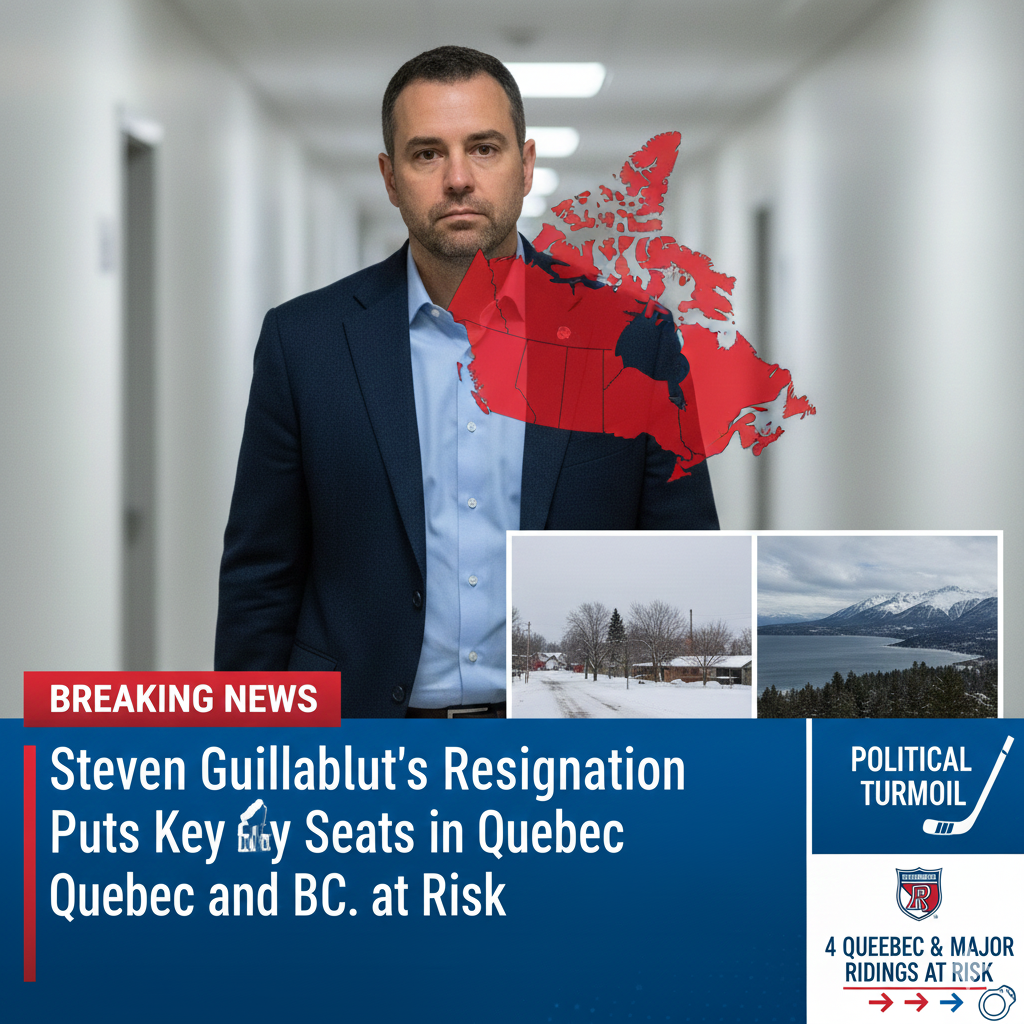
The sudden resignation of former environment minister Steven Guilbeault has sent shockwaves through Canadian politics, raising fresh questions about Prime Minister Mark Carney’s leadership and the stability of the Liberal caucus. According to political analyst Lori Williams, Guilbeault’s departure represents “a real test” for the prime minister, particularly in regions where the former minister held significant influence—most notably Quebec and British Columbia (B.C.).
Guilbeault, known for his strong environmental advocacy and his central role in shaping Canada’s climate policies, has been one of the most recognizable figures in the Liberal government. His resignation comes at a sensitive time, as the government faces growing pressure over economic concerns, climate commitments, and political competition from opposition parties that have been gaining traction in several provinces.
Why Guilbeault’s Resignation Matters
Guilbeault was not just another cabinet minister. A longtime environmental activist before entering politics, he brought both credibility and a loyal voter base to the Liberal Party’s climate agenda. His exit leaves a noticeable gap—not only in policy leadership but also in the public image of the government’s climate commitments.
Guilbeault as the Face of Canada’s Climate Agenda
Over the years, Guilbeault became synonymous with Canada’s climate strategy. He championed major policies, including emissions reductions targets, clean energy investments, and regulations to transition industries toward greener practices.
Even critics acknowledged that he brought authenticity to the portfolio—something rare in modern politics. His activism background connected deeply with young voters, environmental groups, and progressive communities.
Impact on the Liberal Brand
His resignation may weaken the Liberal Party’s credibility on climate issues. Analysts suggest that without Guilbeault, it may become harder for the government to maintain support among voters who prioritize environmental action. It also reinforces perceptions that the government may be softening or recalibrating its approach to climate policy, especially amid rising economic concerns.
Political Fallout in Quebec
Quebec has long been a province where environmental issues hold major political influence. Guilbeault, as a popular Quebec figure, played a crucial role in strengthening the Liberals’ standing there.
Why Quebec Seats Are Now Vulnerable
Many voters in Quebec supported the Liberals specifically because of their strong climate stance—an area where Guilbeault excelled. His presence in the cabinet helped the party counter the Bloc Québécois, which often dominates climate and identity-related debates.
With his resignation:
-
The Bloc Québécois may regain momentum.
-
Liberal support could drop in urban areas like Montreal.
-
Green-leaning voters may shift allegiance.
Williams’ Assessment of Quebec’s Political Risks
Lori Williams argues that without Guilbeault, Carney must work harder to reassure Quebec voters that the government remains committed to climate leadership. She warns that losing even a small percentage of environmentally conscious voters could tip several competitive ridings.
Potential Consequences in British Columbia
British Columbia is another province where climate issues strongly influence election outcomes. Similar to Quebec, B.C. has a large environmentally-minded voter base that has often aligned with the Liberals due to their green policies.
Why B.C. Is Particularly Sensitive
In B.C., issues such as wildfires, coastal erosion, and fossil fuel debates (like pipelines) are central to political decision-making. Guilbeault’s strong national climate presence helped the Liberals maintain support in environmentally active communities such as:
-
Vancouver
-
Victoria
-
North Vancouver
-
Burnaby
Seats at Risk
Analysts suggest that constituencies where the Liberals won by narrow margins could now be vulnerable. With Guilbeault gone, parties like the NDP and the Greens—already strong in B.C.—may capitalize on uncertainty about the Liberals’ climate direction.
A Leadership Test for Mark Carney
Guilbeault’s resignation is not just a regional issue—it is a direct test of Carney’s ability to manage internal party dynamics and maintain national unity.
Rebuilding Trust Within the Quebec Caucus
Quebec MPs relied heavily on Guilbeault’s popularity and credibility on environmental matters. Without him, Carney must reassure caucus members that:
-
Their province’s interests will remain a priority
-
Climate commitments won’t be diluted
-
A strong replacement will be appointed
Maintaining morale within the Quebec caucus is crucial to preventing defections or weakening the party’s internal cohesion.
Navigating Climate Policy Without Its Main Architect
Guilbeault was central to shaping climate legislation, negotiating with provinces, and representing Canada internationally. Carney must now:
-
Identify a successor with equal credibility
-
Reaffirm the government’s climate vision
-
Withstand political attacks from opposition parties
This moment could define his leadership as he faces both internal and external pressures.
Public Reaction and Strategic Implications
The public response to Guilbeault’s resignation has been mixed. Environmental groups expressed concern about losing a key partner inside government, while critics argue that the move reflects deeper tensions within the Liberal climate agenda.
Environmental Community Concerns
Activists fear that the timing of his resignation may signal a shift away from ambitious climate action. Some have demanded reassurance that Canada will:
-
Maintain emissions targets
-
Continue investing in clean energy
-
Strengthen climate regulations
Opposition Parties Sensing Opportunity
The Conservatives, NDP, Bloc Québécois, and Greens have all reacted strategically:
-
Conservatives argue it proves Liberal climate policy is “failing.”
-
NDP and Greens claim Guilbeault’s absence weakens environmental commitments.
-
Bloc Québécois sees an opening to absorb climate-focused Quebec voters.
What Comes Next for the Liberal Party?
The future impact of Guilbeault’s resignation will depend on how the government responds in the coming weeks. Carney must demonstrate stability, continuity, and strong leadership to prevent voter erosion.
H4: Choosing the Right Successor
Finding a capable replacement for Guilbeault will be the first critical step. The new minister will need:
-
Policy expertise
-
Public trust
-
Strong communication skills
-
Appeal in both Quebec and B.C.
H4: Reaffirming Climate Commitments
Carney may need to make high-profile announcements or policy reaffirmations to counter public doubt. Actions will matter more than words, especially in environmentally active regions.
H4: Strengthening Regional Political Strategies
The Liberals will likely adjust their campaigns in Quebec and B.C. to emphasize:
-
Continued climate action
-
Economic opportunities in clean energy
-
Regional development and sustainability
Conclusion
Steven Guilbeault’s resignation marks a pivotal moment in Canadian politics. His departure threatens to weaken the Liberal Party’s support in key provinces and places significant pressure on Prime Minister Mark Carney’s leadership. As Lori Williams warns, this moment represents “a real test”—one that will determine not only the future of the Liberal government’s climate agenda but also its electoral prospects in Quebec and British Columbia.
Leave a Reply