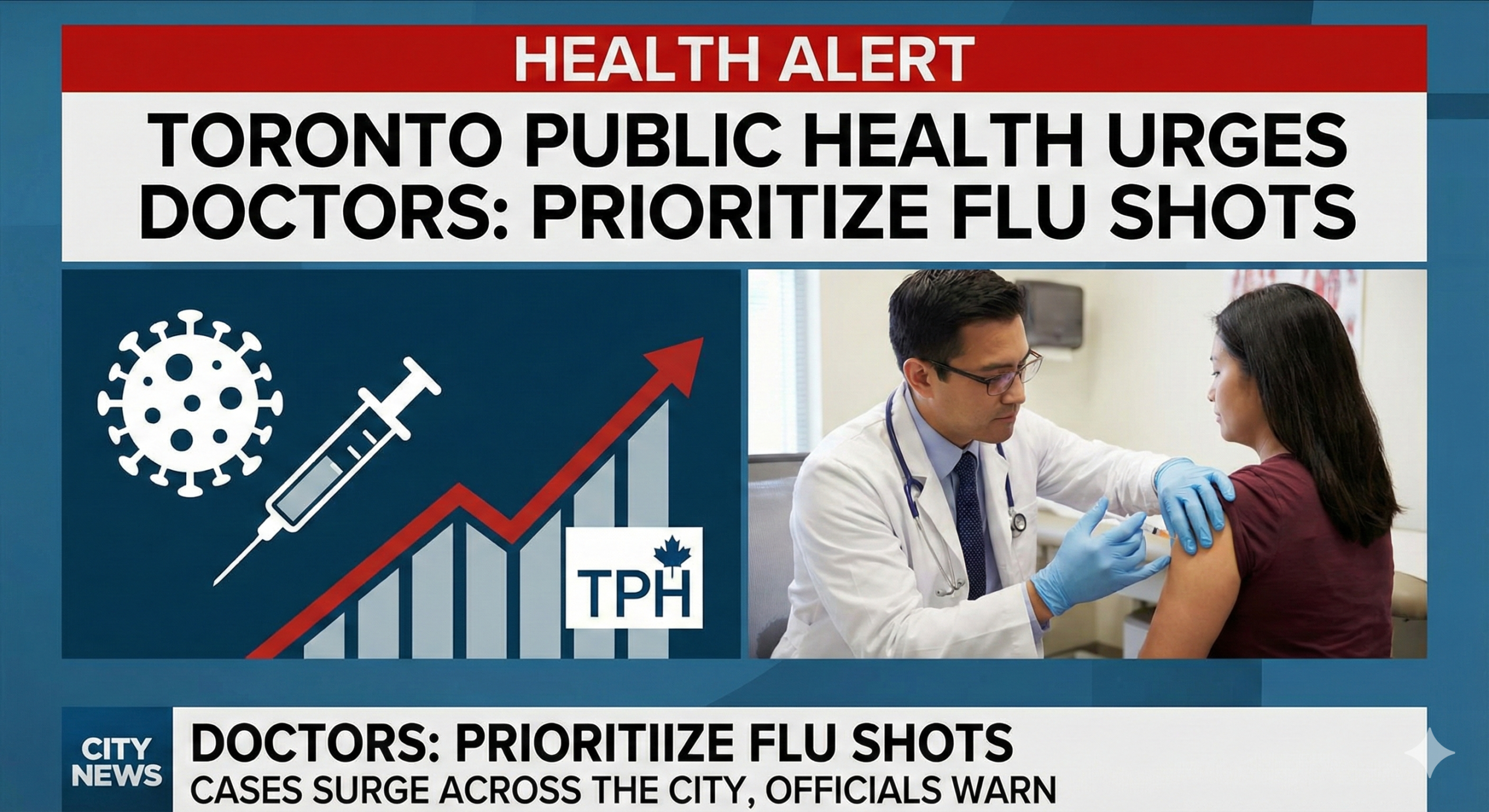
Rising Flu Activity Raises Alarm
Toronto Public Health (TPH) is urging physicians across the city to accelerate influenza vaccinations for their patients, citing a noticeable uptick in flu cases in Toronto and throughout Ontario. According to a weekly e-newsletter sent out Friday, the public health unit cautioned that flu activity is expected to peak by late December or early January — underscoring the urgency of immunizing unvaccinated individuals, especially those at higher risk of severe illness.
Because it takes nearly two weeks for flu vaccine protection to build, TPH is calling on healthcare providers to act now.
Why Vaccination Matters — Even in a “Mismatch” Year
Dominance of H3N2 and the Risk It Poses
The strain currently circulating widely is Influenza A (H3N2). This year, however, the virus has undergone mutations since the vaccine was formulated, a phenomenon known as antigenic drift. As a result, the match between the vaccine and the circulating virus is less than ideal.
Whenever such a mismatch occurs, questions arise about how effective the vaccine might be. It’s a valid concern — past seasons have shown that protection against H3N2 tends to be lower compared to other influenza types.
Yet, the Vaccine Still Provides Valuable Protection
Public-health experts emphasize that even a mismatched flu shot remains the best defense against serious illness, hospitalization, and death.
According to a recent analysis, seasonal flu vaccines — even when mismatched — can significantly reduce the risk of severe outcomes. This is particularly important for vulnerable groups: older adults, people with chronic conditions, and children.
As one expert put it bluntly: “If there’s ever a year to get a flu vaccine, this is the year.”
What This Means for Patients: Who Should Get Vaccinated Now
High-Risk Populations Are a Priority
TPH specifically urged doctors to act quickly when scheduling flu shots for:
-
Older adults
-
People with underlying health conditions (e.g., chronic respiratory illness, immunocompromised individuals)
-
Anyone who has not yet been vaccinated this season
Timing is essential: since immunization needs about two weeks to provide protection, receiving the shot before the flu activity peaks could significantly reduce the risk of severe illness or hospitalization.
Even Healthy Adults Should Consider Getting Vaccinated
While older and vulnerable individuals are top priority, public-health guidance stresses that everyone six months of age and older — without contraindications — should be offered the flu vaccine annually.
Projects from other countries suggest that vaccination remains a worthwhile step even if circulating virus strains don’t match perfectly with the vaccine.
Why This Season is Especially Concerning
New Variant & Early Surge
Health experts around the world are closely monitoring a variant of H3N2 — known as “subclade K” — which has drifted antigenically from the H3N2 strain used in this season’s vaccines.
Some regions in the Northern Hemisphere, including Canada, are already witnessing earlier and sharper increases in flu cases than typical for this time of year.
What a Mismatch Means (and Doesn’t)
A “mismatch” doesn’t render the vaccine useless, but it does lower its effectiveness — particularly against mild to moderate infection. The flu shot may still significantly reduce the risk of severe disease, hospitalizations, and death, which is especially important during busy winter months when healthcare systems are often under pressure.
Moreover, infection outcomes tend to be worse in older adults and people with chronic health issues because immune response to vaccines typically diminishes with age.
What Experts and Public-Health Officials Recommend
-
Get vaccinated as soon as possible. Even if the vaccine isn’t a perfect match, it remains the best tool to prevent serious illness.
-
Target high-risk individuals first. Doctors should prioritize seniors, people with chronic illnesses, immunocompromised patients, and all unvaccinated individuals.
-
Continue other preventive measures. Good respiratory hygiene, staying home when sick, and avoiding crowded indoor spaces can help curb spread, especially during a year when vaccine protection may be reduced.
-
Plan for possible peak later this month or early January. With case numbers rising already, early vaccination is critical to ensure protection by the time flu activity peaks.
Conclusion: Better to Be Protected Than Vulnerable
As flu activity rises in Toronto and across Ontario, the call from Toronto Public Health is clear: now is the time for doctors — and the public — to treat influenza vaccination as a top priority. Even in a season marked by viral mutation and vaccine mismatch, the flu shot remains the most reliable defense against severe disease, hospitalization, and complications.
With flu-season peak expected in the coming weeks, every vaccine administered now can make a real difference — especially for the elderly, the chronically ill, and those yet unprotected. Take the shot. It could be the best shield you have.
Leave a Reply